Galvanized Steel Culvert: A Reliable Choice for Drainage Infrastructure in Indonesia
Why Drainage Infrastructure Matters in Indonesia
Indonesia faces distinct challenges when it comes to managing water flow. Heavy rainfall, seasonal monsoons, and the geography of the archipelago mean that drainage systems must be robust and long-lasting. For anyone involved in civil engineering or construction here, the choice of culvert material is not just a technical detail, it affects the longevity and safety of roads, toll roads, bridges, and irrigation networks. I have seen projects where poor drainage led to premature road failures, flooding, and costly repairs. That is why selecting the right culvert material deserves serious attention.
Among the options available, the Galvanized Steel Culvert stands out for its strength, corrosion resistance, and ease of installation. Unlike concrete culverts, which can crack under heavy loads or during seismic events, steel culverts offer flexibility. They can handle ground movement better, which is crucial in regions with active soil conditions. And because they are lighter, they reduce transportation and labor costs on site. I recall a project in West Java where switching from concrete to steel cut installation time by nearly 40 percent, without sacrificing structural integrity.
What Makes Galvanized Steel Culvert a Smart Choice
The term Galvanized Steel Culvert refers to a steel pipe or structural plate that has been coated with a layer of zinc to prevent rust. This galvanization process creates a barrier between the steel and the elements, extending the service life of the culvert significantly. In the Indonesian context, where humidity and rainfall are high, that protection is invaluable.
One of the key advantages is the material's ductility. When a heavy truck passes over a road or when the ground settles unevenly, a steel culvert can deform slightly without losing its load-bearing capacity. Concrete, by contrast, tends to crack under similar stress. Over the years, I have observed that steel culverts installed under toll roads and highways in Java continue to perform well even after decades, while some concrete structures nearby needed replacement or extensive repair.

Another factor is the ease of joining sections. Steel culverts can be connected with simple bands or couplings, creating a watertight seal that prevents leaks and soil infiltration. This is critical for maintaining the integrity of drainage systems, especially in areas prone to flooding. A good seal means water goes where it is supposed to, away from the road or foundation, rather than undermining the structure.
Local Manufacturing and Quality Standards
Indonesia has its own standards for construction materials, and for culverts, the SNI (Standar Nasional Indonesia) certification is the benchmark. A product that carries SNI certification has passed rigorous testing for material quality, dimensional accuracy, and performance. This is not just a piece of paper; it means the culvert can be relied upon in critical infrastructure projects. PT Primari Inrahm Utama, based in Bekasi, produces galvanized steel culverts that meet both SNI and TKDN (Tingkat Komponen Dalam Negeri) requirements. TKDN certification is important for government projects, as it ensures a certain percentage of the product's value comes from domestic components and labor.
Having a local manufacturer like PT Primari Inrahm Utama is a benefit for project managers and contractors. It means shorter lead times, easier communication, and support from people who understand local conditions. The factory in Bekasi produces both gorong-gorong bulat (round culverts) and gorong-gorong pipa (pipe culverts) in various diameters and ketebalan (thicknesses). This range allows engineers to specify exactly what their project needs, whether it is a small drainage crossing for a local road or a large culvert for a toll road or irrigation canal.
I have visited several factories producing steel culverts, and the one in Bekasi operates with modern equipment and quality control processes. The ability to produce different diameters, from small pipes for residential drainase to large structures for major saluran air, gives flexibility. When a contractor can order custom sizes without waiting for imports, the entire supply chain becomes more efficient.
Applications in Key Infrastructure Sectors
Galvanized steel culverts are used across a wide range of infrastructure in Indonesia. Here are a few common applications:
- Road and toll road drainage: Keeping water off the pavement to prevent hydroplaning and pavement damage.
- Bridge approaches: Protecting bridge abutments from erosion and managing water flow around the structure.
- Irrigation canals: Conveying water efficiently to agricultural areas, especially during the dry season.
- Urban drainage systems: Reducing the risk of banjir (flooding) by moving stormwater quickly to retention ponds or rivers.
- Industrial and residential site development: Managing runoff from large paved areas.
Each of these applications demands a culvert that can withstand the specific loads and environmental conditions of the site. For example, a culvert under a toll road must handle heavy traffic loads and high water flow during storms. A culvert used in irrigation must resist corrosion from fertilizers and soil chemicals. The versatility of galvanized steel makes it suitable for all these scenarios.
Comparing Galvanized Steel with Other Materials
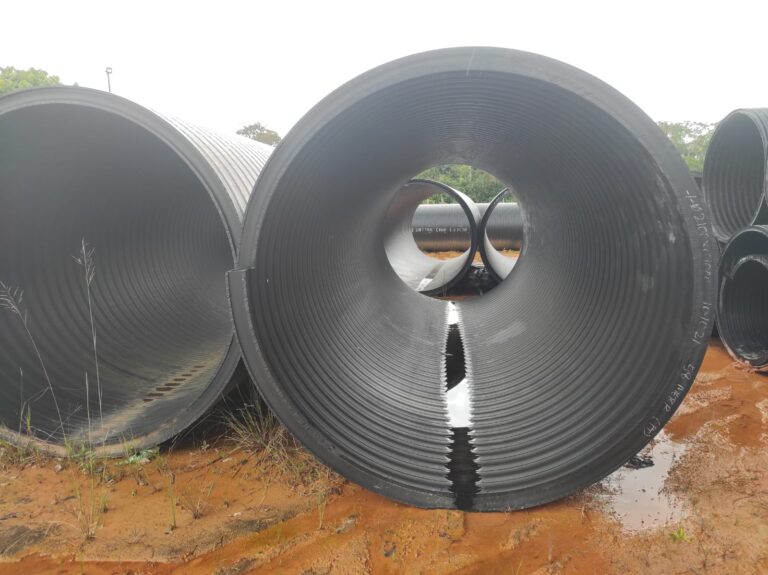
When choosing a culvert material, engineers often compare steel, concrete, and plastic. Each has its place, but for many projects in Indonesia, steel offers the best balance of strength, durability, and cost. Concrete is heavy and rigid; it can fail under differential settlement or seismic loads. Plastic (HDPE) is light and corrosion-resistant, but it lacks the load-bearing capacity for deep burial or heavy traffic. Steel sits in the middle, strong enough for most applications, flexible enough to absorb ground movement, and with a protective zinc coating that resists rust for decades.
I have seen cases where plastic culverts collapsed under the weight of a road embankment, and concrete culverts cracked after a minor earthquake. Steel culverts, properly designed and installed, tend to show fewer such failures. That is not to say steel is perfect for every situation, in highly acidic soils or with certain industrial effluents, additional coatings or a different material might be needed. But for the vast majority of drainage, road, and irrigation projects, galvanized steel is a reliable workhorse.
Installation and Maintenance Considerations
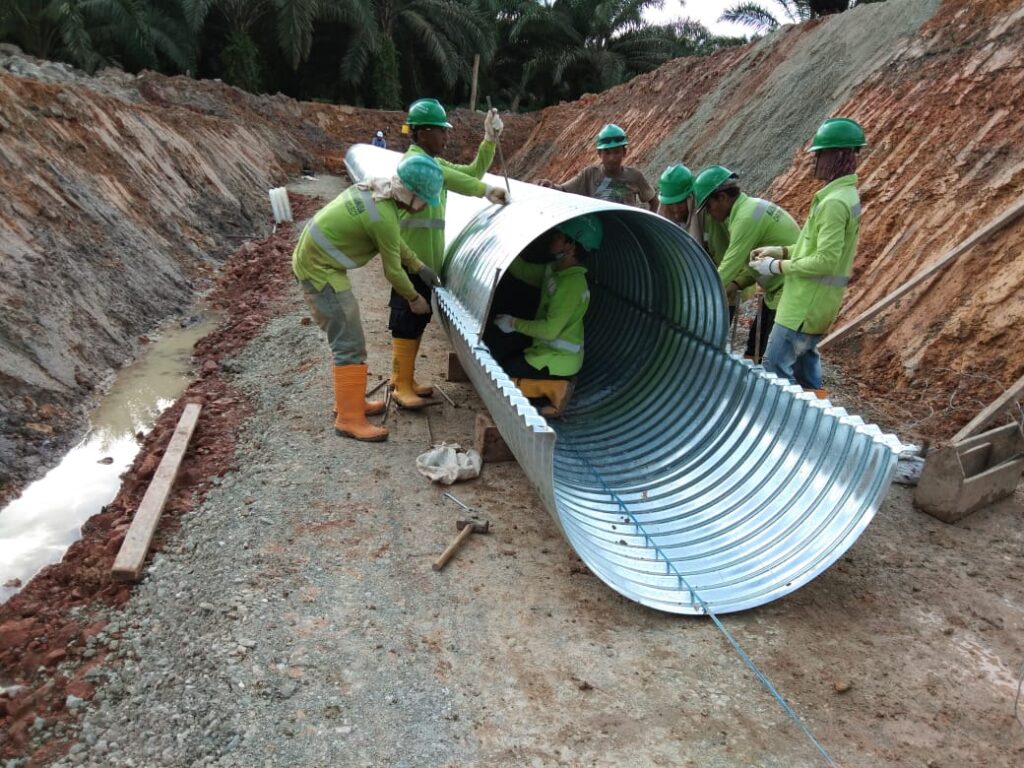
Proper installation is as important as material choice. A well-made Galvanized Steel Culvert can perform poorly if it is not bedded correctly or if the backfill is inadequate. The key steps include preparing a stable foundation, ensuring proper alignment and grade, and compacting the surrounding soil to prevent voids. Many contractors in Indonesia are familiar with steel culvert installation, which helps reduce errors on site.
Maintenance is generally minimal. Periodic inspections, especially after heavy rains, can catch issues like debris buildup or minor corrosion at joints. If the zinc coating is damaged during handling or installation, touch-up paint with zinc-rich compounds can restore protection. In most cases, the life of a galvanized steel culvert exceeds 50 years, especially when it is not exposed to aggressive chemicals.
Why Local Certification Matters
For government-funded projects, using materials with SNI and TKDN certification is often mandatory. This is not just about compliance. It is about ensuring that the materials used are suitable for Indonesian conditions and that the money spent supports local industries. PT Primari Inrahm Utama’s products carry both certifications, which gives project owners confidence that the culverts meet national standards and contribute to the local economy.
In my experience, dealing with a certified local supplier also simplifies the procurement process. Documentation for quality assurance is easier to obtain, and if there is a problem, the manufacturer is a phone call away, not on the other side of the world. This is particularly valuable for large infrastructure projects with tight schedules.
Closing Thoughts
Drainage infrastructure may not be glamorous, but it is essential. In a country where flooding can disrupt communities and damage roads, getting the details right matters. The Galvanized Steel Culvert has proven itself over many decades as a reliable solution for conveying water, supporting loads, and resisting corrosion. With local manufacturers like PT Primari Inrahm Utama producing certified products in Bekasi, Indonesian engineers and contractors have access to high-quality materials that meet both national standards and project needs.
When I talk to young engineers starting their careers, I often encourage them to pay attention to the basics, drainage, materials, and installation. These fundamentals determine whether a road lasts ten years or fifty. Choosing the right culvert material is one of those fundamental decisions. And based on what I have seen in the field, galvanized steel remains a top contender for projects across Indonesia, from busy toll roads to remote irrigation canals.